Nine Small Print Swaps That Quietly Add £300 to Your Van Renewal

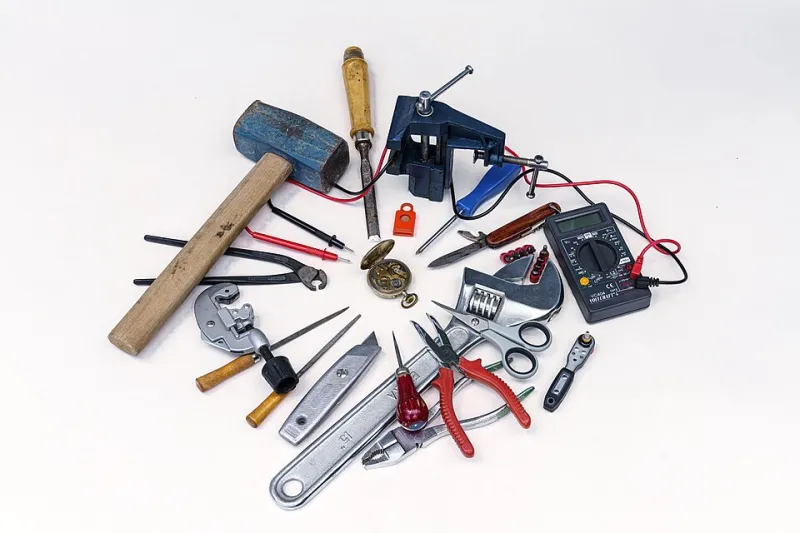
Photo: Burgess, D., A.M., Public domain, via Wikimedia Commons
The renewal email lands about three weeks before your policy lapses. The number has jumped. Somewhere near the bottom sits a cheerful line about cover being renewed automatically 'to keep you protected', plus a link that goes straight to a card payment page. That is the moment to stop reading and start checking, because the £300 usually isn't one big hike. It is eight or nine small edits, stacked on top of each other.
Here is how we tear down a renewal pack, in the order the money hides.
1. The quote is not the product you bought last year
Insurers rebuild your policy from scratch each year. The underwriter behind it may have changed, the panel has shuffled, and the wording you agreed to twelve months ago is not necessarily the wording in front of you now. Before you look at the price, find the schedule and the policy booklet, and check they match your van, your trade and your address. If the booklet has a new date on it, read the bits that mention tools and theft.
2. Mileage bands that quietly moved
Last year you declared 12,000 miles. This year the schedule says 20,000, because the system defaulted to the highest band on your old quote or the broker estimated for you. More miles means more risk means more premium. Check the annual figure, check whether it is total mileage or business mileage, and check that a second driver's commuting hasn't been folded in. Dropping a band can be worth £40 to £80 on a typical van policy.
3. Named drivers who vanished, or appeared
A labourer who left in March is still on the policy, or your apprentice has been added without a conversation. Named drivers cut both ways: adding a 19-year-old can add hundreds, while removing a driver with a claim history can take money off. Look at every name and every date of birth. If someone no longer drives the van, get them off before you pay.
4. Tool cover: 'in the vehicle' is not 'in a locked compartment'
The headline '£1,000 tools cover' sounds fine until you read the conditions. Many policies only pay if tools are in a locked, hard-sided container bolted to the van, or only while the vehicle is attended. Others apply a single-item cap of £250, which is no help when your mitre saw alone cost £600. Check the limit, the single-article cap, the overnight storage requirement and whether theft from an unlocked van is excluded outright.
5. Breakdown cover, quietly trimmed
Roadside assistance and full recovery are different products. So is home start. A renewal that drops recovery to keep the headline price down looks cheaper until you are stranded 90 miles from a job with a broken clutch. If you already have cover through a trade body, a bank account or a second vehicle policy, ask for it to be removed rather than paying twice.
6. Legal expenses that do very little
A £25 to £40 add-on for uninsured loss recovery is often bundled in by default. It isn't worthless, but plenty of trades already have similar protection through home insurance or a union membership. Ask what it actually covers, then ask for the premium back if you don't need it.
7. Voluntary excess drift
To hold the price steady, someone may have pushed your voluntary excess from £250 to £500. That is a real saving on paper and a real bill at the worst possible moment. Check the compulsory excess, the voluntary excess and the separate windscreen excess. If a young driver is named, there may be an additional young driver excess stacked on top.
8. Overnight parking and the address on the policy
If you moved house, started parking on the street instead of the drive, or began leaving the van at a yard, the rating could be wrong in your favour or against it. Wrong is the dangerous word: an inaccurate parking declaration is exactly the sort of thing an insurer can point to when a van full of tools goes missing.
9. Modifications the system doesn't know about
Ply lining, a roof rack, sign writing, a tow bar, a reversing camera, an aftermarket alarm. Some are free to declare, some add a small amount, and all of them matter if you claim. 'Standard vehicle' on the schedule is an assumption, not a fact.
The £300, added up
These figures are illustrative, but they show the shape of it: mileage band up £55, a named driver left on £60, tools cover restructured rather than priced £0, breakdown trimmed to roadside minus £30, legal expenses added £28, voluntary excess doubled saving £70, and a re-rated postcode adding £90. Net it out and you get a modest-looking increase built from a dozen decisions you never made.
Haggle or switch? A twenty-minute test
Get one alternative quote for the same cover, not the cheapest headline you can find. If the renewal is more than 20% above it, or more than £120 higher, switch. If it is within £50 to £80, haggle, because a retention discount is usually cheaper for the insurer than losing you. Never cancel by simply ignoring the auto-renewal until the money leaves your account. Check the cancellation terms and any admin fee first.
Three scripts that work on the phone
'Can you confirm the annual mileage, the named drivers and the tools limit on the renewal, and read me the overnight parking declaration?'
'I've had a like-for-like quote at £X with the same excess. Can you match it or get close, and if not, can you tell me what's driving the difference?'
'Please remove the legal expenses and confirm in writing that auto-renewal is switched off for this policy.'
Your pre-payment checklist
- Compare like for like: excess, tools limit, breakdown level, courtesy vehicle.
- Confirm mileage, drivers, address and modifications in writing.
- Read the tools theft conditions twice, especially overnight storage.
- Note the renewal date and the last day you can cancel without a fee.
- Keep proof of no-claims bonus and a photo of the van and rack setup.
None of this is glamorous. It is, however, the difference between a renewal you chose and one that happened to you.