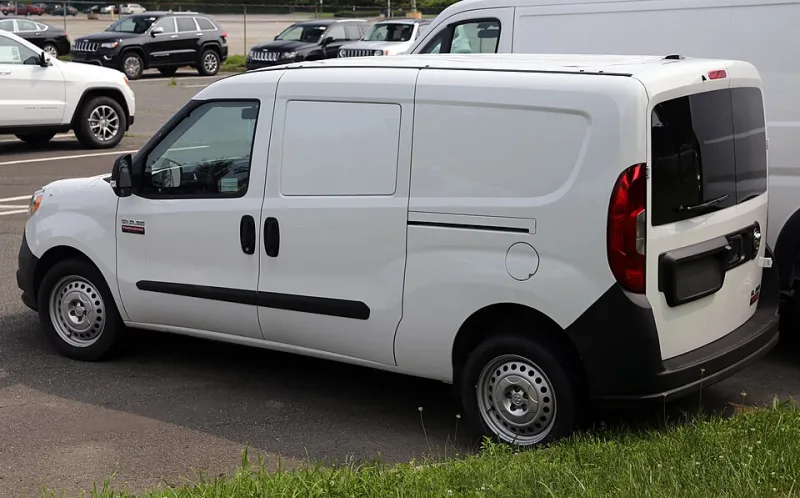
Transfer or Cancel? The Mid-Policy Van Swap Maths That Decides Which Is Cheaper

You've found it. A 2022 Transit Custom with 41,000 miles, full service history and a price that doesn't make you wince. Your current Vivaro is still going strong, but the deal won't wait, and there are five months left on a policy you renewed back in the spring. So you ring the insurer, expecting a quick admin update.
Then they quote you a figure for the change, mention something about a "short-rate table" if you'd rather cancel, and ask whether the new van has racking fitted. Suddenly you're doing algebra on the back of a delivery note.
This is the mid-policy van swap, and it's one of the few moments in van insurance where a bit of preparation genuinely moves the number.
Your old policy doesn't automatically follow the new van
Start with the thing that catches people out on the forecourt. Comprehensive cover on vehicle A does not extend to vehicle B just because you own both. The "driving other vehicles" clause buried in some policies typically excludes vans, excludes vehicles you own, and often limits cover to third party only anyway. So driving the new van home on the strength of your existing policy is not a plan — it's an uninsured journey with a DVLA and Continuous Insurance Enforcement risk attached.
You need the new registration added to the policy, with cover confirmed, before the wheels turn. Most insurers can do it over the phone or in an app in minutes. Just don't assume the confirmation email has landed when it hasn't.
The two refunds: pro-rata versus short-rate, in plain English
When a policy ends early, insurers calculate what you're owed in one of two ways.
Pro-rata is the fair-weather version. You paid for 365 days, you used 212, so you get back roughly the unused 153 days as a percentage of the premium. Clean, simple, no penalty.
Short-rate is the version with a built-in sting. The insurer keeps a bigger slice than the days you actually used, because early cancellation costs them admin and lost income. A short-rate table might hand back 30% after seven months, where pro-rata would return around 42%. On a £900 premium, that's the difference between roughly £270 and £378 — before any cancellation fee of £30 to £60 is deducted.
Which one applies depends on your policy wording, and crucially on who is ending the cover. If the insurer cancels, you usually get pro-rata. If you cancel, expect short-rate. Ask the question directly: "If I cancel this policy in July, do I get a pro-rata or short-rate refund, and what's the fee?" Get it in writing before you commit to buying anything.
Why the mid-term price can look worse than a fresh quote
The frustrating bit: a change-of-vehicle quote often comes out higher than a brand-new policy for the exact same van would. There are three reasons, and none of them are personal.
First, mid-term adjustments are usually re-rated at the insurer's current rates, not the rates you locked in at renewal. If the market has hardened, or theft claims in your postcode have climbed, you wear that increase for the remaining months.
Second, the discount that made your original premium competitive — the new-business or online-save discount — rarely travels. You're already a customer. The insurer has you. A fresh quote from a rival is priced to win you, which is why it can undercut your own insurer's mid-term figure.
Third, admin fees. A vehicle change fee is normally £25 to £50, and it's charged on top of any premium difference, not instead of it.
The upgrade trap: what actually changes when the van changes
Going from a 2016 plate to a 2022 plate isn't just a registration swap. It touches almost every rating factor an underwriter cares about.
- Value. A newer, pricier van costs more to replace, so the premium rises even if nothing else changes.
- Repair costs. Newer models mean dealer parts, ADAS sensors and calibration — all of which insurers price in.
- Modifications. If the new van has racking, a ply-lined load bay, a bulkhead, sign writing or a roof rack, declare them. Some are free to note; some change the terms. Undeclared kit is a well-worn route to a reduced payout.
- Security. Does it have an alarm and immobiliser as standard? Factory-fitted Thatcham kit can pull the premium down. An aftermarket tracker you forget to mention doesn't help anyone.
- Mileage and use. A bigger van often means longer runs. If your declared annual mileage or use class no longer fits, fix it now rather than at claim stage.
- Finance. If the new van is on HP or a lease, the finance company's interest needs noting on the policy.
The gap between the two vans
There's a short, dangerous window here. If you sell the old van on Friday and the new one arrives Monday, what's covering what? Options include transferring cover across on the day of sale, arranging temporary cover, or — if you're keeping both for a few weeks — asking whether the insurer will run a second vehicle on the policy. Some will, some won't, and multi-van policies are priced separately anyway.
Whichever route you take, don't leave the old van insured after you've sold it. The buyer's crash becomes your claim history if the policy is still live, and the new keeper's details need to reach DVLA.
A worked example
Say you paid £900 for the year, and you're 212 days in with 153 days left. Your insurer quotes £1,250 a year for the new van at current rates.
The transfer: (1,250 − 900) × 153 ÷ 365 = roughly £147, plus a £35 change fee. Total outlay: about £182.
The cancel-and-reinsure: short-rate refund of maybe £270, minus a £50 fee, so £220 back. Then a fresh annual policy at £1,100 — cheaper per year, but you're buying twelve months when you only needed five, and you'll be shopping again next summer.
On those numbers, the transfer wins comfortably. But run the sums whenever the transfer quote exceeds what a full new year of cover would cost — that's when cancelling, painful as the short-rate refund is, stops being the expensive option.
The 2026 swap checklist
- Get the change-of-vehicle quote in writing before you pay a deposit on the new van.
- Ask for the cancellation figures side by side: pro-rata refund, short-rate refund, and fees.
- Confirm the new van's cover start date and time — not just the date.
- Declare racking, ply-lining, wraps, towbars and anything else bolted on.
- Update annual mileage and use class if the new van changes your working pattern.
- Note any finance interest on the policy.
- Don't drive the new van until you have written confirmation it's covered.
The sting that shows up six months later
One last thing. That mid-term adjustment quietly resets your baseline. When renewal lands, the insurer prices the new year from the adjusted figure — including the mid-term re-rating and the fact you're no longer on a discounted rate. It's worth running a fresh comparison at renewal rather than accepting the quote, because the gap between "loyal customer" pricing and "new customer" pricing is often wider than the £182 you paid to swap vans in the first place.