The Towbar Is Where Your Cover Stops: A Tradesperson’s Guide to Trailer Insurance Gaps
You’ve checked the tyres, strapped down the mixer, and remembered the breakaway cable. The one thing you haven’t checked is whether your van policy actually covers the trailer behind you. For plenty of tradespeople, that’s the gap that only appears after a slip on a wet roundabout or a claim from a driver who’s just watched a shed-load of timber bounce across two lanes.
Cheap van insurance is priced around the van — its value, its postcode, its use. A trailer is a separate lump of metal, and insurers tend to treat it that way. Some policies include limited trailer cover. Many don’t. The paperwork can be vague, the call centre can be friendly but non-committal, and the towbar itself can be a modification that changes the conversation.
Here’s how to work out where your cover stops before you hitch up in 2026.
The towbar is a boundary, not a guarantee
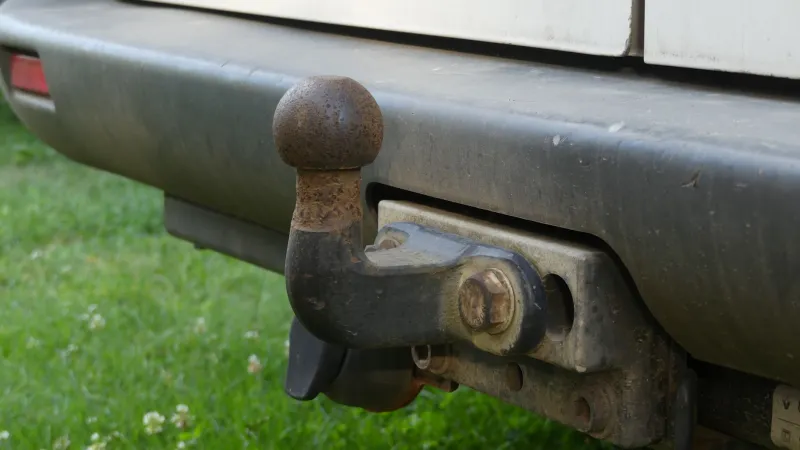
A towbar is not just a bit of metal bolted to the back of your van. It is a signal to an insurer that you may tow something. That can affect how the policy is priced and what conditions apply. Some insurers want to know about a towbar as soon as it is fitted. Others may not ask directly, but the moment you make a claim while towing, the question will come up: was the trailer declared, and was the towbar part of the policy picture?
This is why the towbar is a useful boundary marker. It separates ‘van with a towbar’ from ‘van being used to tow’. The first may be fine on a standard policy. The second may need a trailer-use endorsement, a weight limit, a business-use note, or all three. If you only check one thing before towing, check that the policy schedule and the insurer’s records match what you are actually doing.
What ‘trailer use’ actually means on a schedule
Trailer cover is not one single product. It is a set of permissions and exclusions that can vary wildly between insurers. A policy might say trailer use is included for social, domestic and pleasure purposes only. That is not much help if you are towing a cement mixer to a customer’s driveway on a Tuesday morning. Another policy might include third-party liability while towing but exclude damage to the trailer itself. A third might cover an owned trailer but not a borrowed or hired one.
The wording matters more than the headline premium. Look for phrases like ‘trailer use’, ‘towing’, ‘drawbar trailer’, ‘third-party liability whilst towing’, and ‘maximum trailer weight’. Then ask whether the cover applies to your business use, your trailer, your load, and the places you park it. If the schedule is silent, do not assume silence means yes. In insurance, silence usually means you need to ask.
The third-party bit people miss
Most tradespeople focus on the trailer itself — the rusting flatbed, the box trailer, the plant trailer. But the bigger financial risk is usually the third party. If your trailer swings wide on a bend and clips a parked car, or if a wheel bearing fails and the trailer causes a multi-vehicle shunt, the other driver’s claim can be substantial. Your van policy may respond to your legal liability while towing, but it may also have conditions or exclusions that only become clear after the incident.
Then there is the load. A trailer full of tiles, timber, or tools is generally not covered by the van’s motor policy. Tools might be covered under a separate tool policy, but those policies often have limits for items in or on a trailer, overnight parking conditions, and theft from an unattended vehicle. If you are carrying customer goods or materials for hire and reward, you may need goods in transit cover as well. The trailer, the load, and the liability are three different questions. Ask all three.
Weight, licence and the plated numbers
Insurance and driving licence rules both care about weight, and they do not always use the same language. You will see terms like maximum authorised mass, gross train weight, and unladen weight. The practical version is this: your van has a plated limit, your trailer has a plated limit, and the combination has a limit too. Towing beyond those numbers can affect both the legality of the journey and the insurer’s view of the claim.
Licence rules matter as well. The category on your driving licence determines what you can tow, and the rules changed for many drivers in recent years. If you are unsure whether your licence covers the van and trailer combination you use for work, check before you rely on it. An insurer may ask about your licence as part of a claim, and a mismatch can turn a cheap policy into a very expensive argument.
A pre-tow checklist that takes ten minutes
Before you hitch up, run through these questions. They are not legal advice, but they are the right questions to put to your insurer.
- Is trailer use included on my policy, and does it apply to business use?
- Is the trailer itself covered for damage, theft, and fire — or only third-party liability?
- Is a borrowed or hired trailer treated the same as my own trailer?
- What is the maximum trailer weight my policy allows?
- Is the load in the trailer covered, and if so, under which policy?
- Do I need to declare the towbar as a modification?
- Does my licence cover this van and trailer combination?
- Are the trailer lights, tyres, brakes, and breakaway cable in working order?
- If the trailer is parked overnight, does the policy require it to be secured or stored off-road?
Get the answers in writing if you can — an email or a web chat transcript is better than a half-remembered phone call. If the insurer says trailer cover is included, ask them to confirm the conditions in plain English. If they say it is not included, ask what endorsement would add it and what it would cost. That quote is part of your renewal comparison, not an afterthought.
When it goes wrong
A trailer claim rarely starts with a dramatic motorway pile-up. It often starts with a jack-knife in a farm gateway, a shed-load spill on a roundabout, or a trailer that rolls back into a neighbour’s wall. The insurer will want to know whether the trailer was declared, whether it was within weight, whether it was being used for business, and whether it was securely hitched and loaded. If the answer to any of those is no, the claim can be reduced or rejected.
That is the real cost of a trailer cover gap. It is not the few pounds you saved on the premium. It is the repair bill, the third-party claim, the lost tools, and the time spent arguing when you should be on site.
The bottom line
Trailer cover is not automatic, and it is not safe to assume that a cheap van policy includes it just because the van has a towbar. Check the schedule, ask the three questions — trailer, load, liability — and confirm the weight and licence rules before you tow. If the policy does not fit, either add the right endorsement or change the policy. The trailer behind you should not be a stranger to your insurer.