The Buyer's Crash, Your Claim: Insuring a Van Test Drive Before the Keys Change Hands

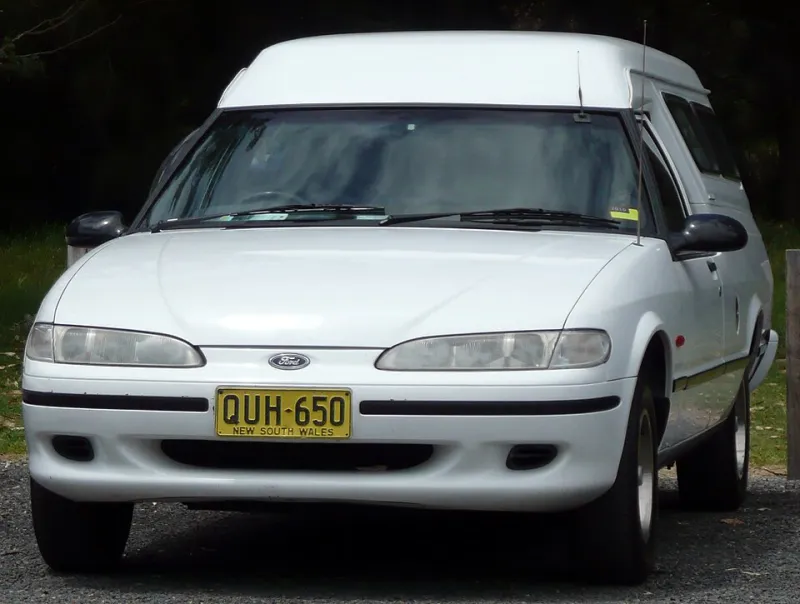
Photo: Jorge Royan, CC BY-SA 3.0, via Wikimedia Commons
You've had the calls, you've had the bloke who offers £800 under asking 'cash today', and now someone sensible is standing on your drive asking for a quick spin before they commit. Fair enough. Nobody hands over four grand for a van-shaped question mark without driving it first.
But that short trip — from 'hop in' to 'here's the readies' — is one of the least insured moments in private van selling. It doesn't matter that it's your van, your road, your postcode. The second somebody else is behind the wheel, the question changes from what's covered to who's covered, and those are not the same thing.
Your policy covers the van, but on your terms
Comprehensive cover isn't a general licence for anyone to have a go. Your certificate names the drivers, and your schedule sets out the permissions — typically social, domestic and pleasure, plus the business use you declared. Nothing on that document says 'any prospective purchaser may drive this vehicle unaccompanied'.
Most van policies also carry wording about who may drive with your permission, and some are stricter than others. A few exclude use in connection with selling the vehicle. Quite a lot quietly assume the person driving has their own cover in place.
Here's the uncomfortable bit. If an uninsured buyer has a bump, your insurer may still have to deal with injury or damage to a third party, because the Road Traffic Act doesn't care whose fault the paperwork is. What they can then do is come after you for the money, note the incident against your policy, and watch your renewal premium climb accordingly. Damage to your own van is the part most likely to fall on your side of the line — and if the buyer has no cover at all, that's a bill with nobody to send it to.
The buyer's 'I'm fully comp, mate' line — three catches
Nearly every private sale hits this moment. The buyer insists their own insurance covers them to drive any vehicle, so there's nothing to worry about. Sometimes that's true. Usually it's true with caveats.
Catch one: it's almost always third party only. The drive-other-vehicles (DOC) extension most policies include covers damage the driver does to other people and their property. It does not repair the van they just kerbed, cooked the clutch on, or shortened by two feet against a bollard. Your van is uninsured for its own damage in that scenario.
Catch two: vans are often excluded altogether. Plenty of DOC clauses say 'any private motor car' and mean it. Commercial vehicles, or anything over a certain weight, can be carved out entirely — and the buyer genuinely may not know that, because it's buried in a section they've never read.
Catch three: the buyer's policy has conditions. Some wordings require the other vehicle to be insured in its own right, some exclude vehicles in the custody of a motor trader, and some only apply if the driver is the policyholder rather than a named driver. Any of those can quietly switch the cover off.
Causing or permitting: the offence nobody brings up
This is the part worth reading twice. Under section 143 of the Road Traffic Act 1988, it's an offence to use a vehicle with no insurance — and it's also an offence to cause or permit someone else to use one. Letting an uninsured buyer take your van for a spin isn't just a bad idea. It's potentially your problem, not theirs, with a fine that can run to four figures and points on your licence. Police can also seize the vehicle.
You don't need to be a lawyer to see the shape of that risk. You're the one handing over the keys.
Three ways to make the drive actually covered
1. The buyer arranges temporary cover for the day. This is the cleanest option and the one worth pushing for politely. Short-term or day insurance is widely available, and a serious buyer won't blink at £20–£40 to test-drive a van they're about to buy. Ask to see the certificate before they get in — the vehicle registration and the driver's name should both appear, with the date matching.
2. Add them to your policy for the day. Some insurers will add a temporary named driver for a short period for a fee. It's not universal, it can be administratively fiddly, and adding a stranger can affect your renewal, so ring your insurer and ask rather than assuming. Get written confirmation before the drive, not after.
3. Let a trader use their motor trade policy. If the buyer turns up in a trade capacity, they should be able to show a motor trade road risk certificate covering the use. Ask to see it. A genuine trader will have it in the glovebox.
Do the DVLA licence check either way. The share code service at gov.uk/view-driving-licence gives you 21 days' worth of access to check categories, endorsements and disqualifications. It takes three minutes and it's the single best habit in private vehicle selling.
Keep the van insured until it's genuinely gone
A lot of sellers cancel cover the moment cash changes hands, then discover the buyer hasn't taxed or insured it, the DVLA record still shows them as keeper, and continuous insurance enforcement is sending letters. Hold your policy until the V5C transfer is done and you've had confirmation. Then cancel, and expect a small refund net of any admin charge.
Write a dated receipt too: time, mileage, price, registration, buyer's name and address, 'sold as seen'. Two copies, both signed. It costs nothing and settles arguments later.
Test-drive day checklist
- Check the buyer's licence on the DVLA share code service before they sit down.
- See an insurance certificate naming them, in date, covering that vehicle or DOC use.
- Ring the insurer if the wording is vague. Two minutes on hold beats a claim.
- Have them read the DOC clause themselves if they're relying on it.
- Agree a route and stick to it — no motorway detours, no towing demonstrations.
- Ride shotgun. Every time.
- Note the time, date and mileage before the drive.
- Confirm the van isn't already showing as sold or transferred on the DVLA record.
- Keep the van insured until the new keeper is confirmed.
- File the signed receipt with the V5C slip you hand over.
The sale is the point. The drive is the risk. Twenty minutes of admin beats six months of arguing with an insurer about whose fault it was.